Preserving the Leaves of Words: Classical Poetry, Cognitive Relativity, and the Digital Garden
A deep dive into the historical roots of the Japanese word 'Kotonoha' (言の葉), the spiritual power of 'Kotodama' (言霊), cognitive science's Sapir-Whorf hypothesis, and modern efforts to preserve linguistic diversity.
The Seed and the Leaves (種と葉)
In the year 905 CE, Heian-court poet and critic Ki no Tsurayuki wrote the landmark Kana Preface (Kana-jo) to the Kokin Wakashu (Collection of Japanese Poems of Ancient and Modern Times). He began with a poetic metaphor that would forever define the Japanese understanding of language:
「やまとうたは、人の心を種として、万の言の葉とぞなれりける」 "Japanese poetry has the human heart as its seed, growing into myriad leaves of words."
This is the historic etymology of Kotonoha (言の葉), the classical Japanese word for language and speech. In this definition, koto (言) is the concept or word, and ha (葉) is the leaf. Our thoughts, feelings, and impulses are the seeds buried within our hearts. When they surface, they blossom into a canopy of words—leaves reaching out to connect with other minds.

During the Heian period, literary prestige in Japan was almost exclusively dominated by Chinese character writing (Mana), used in administration and high-class kanshi poetry. Writing the preface in native phonetic Kana script was a radical act of language preservation. Ki no Tsurayuki proved that the vernacular tongue possessed the sophistication to convey profound literary theory and emotional depth, saving the native voice from being overshadowed.
Kotonoha vs. Kotodama: The Outward and the Inward
To understand the weight of Japanese words, we must contrast Kotonoha with another ancient concept: Kotodama (言霊), or the "spirit of words."
Rooted in Shinto animism, Kotodama is the belief that words contain an active, mystical force capable of influencing reality. In this worldview, language does not merely describe the world; it shapes it. Speaking positive, harmonious words (yamatokotoba) invites blessing and peace, while voicing negative or discordant thoughts can trigger physical misfortune.

While Kotodama represents the spiritual power and moral responsibility buried within the seed of expression, Kotonoha represents the outward, delicate, and organic manifestation of that spirit. This belief system still influences modern Japanese interactions. The ritualized expressions of gratitude and solidarity used daily—such as itadakimasu (頂きます, a humble receipt of life before meals) and otsukaresama desu (お疲れ様です, honoring another's labor)—are modern extensions of Kotodama, acting as verbal charms to sustain social harmony.
The Loss of the Forest: Why Language Preservation Matters
According to modern linguistic research, a language dies approximately every two weeks. If current trends continue, nearly half of the world's 7,000 spoken languages will fall silent by the end of this century.
This is not just a loss of vocabulary; it is a loss of cognitive diversity. The Sapir-Whorf Hypothesis (linguistic relativity) in cognitive science asserts that the structure of a language shapes how its speakers perceive and categorize reality. Each language is a unique operating system for the human mind. When a language disappears, we lose a distinct database of human experience, ecological wisdom, and emotional granularity.
For centuries, Japanese has cultivated specific, untranslatable words to map subtle states of human feeling and natural phenomena:
- Mono no aware (物の哀れ): The bittersweet awareness of the transience of all things, accompanied by a gentle, appreciative sadness at their passing.
- Komorebi (木漏れ日): The visual pattern of sunlight filtering through the leaves of trees.
- Wabi-sabi (侘寂): An aesthetic and philosophical appreciation of imperfection, simplicity, and the natural cycles of growth and decay.
- Yūgen (幽玄): A profound, mysterious sense of the beauty of the universe that lies beyond the reach of literal description.
- Shinrin-yoku (森林浴): The practice of "forest bathing"—healing the mind and body by fully absorbing the atmosphere of the woods.
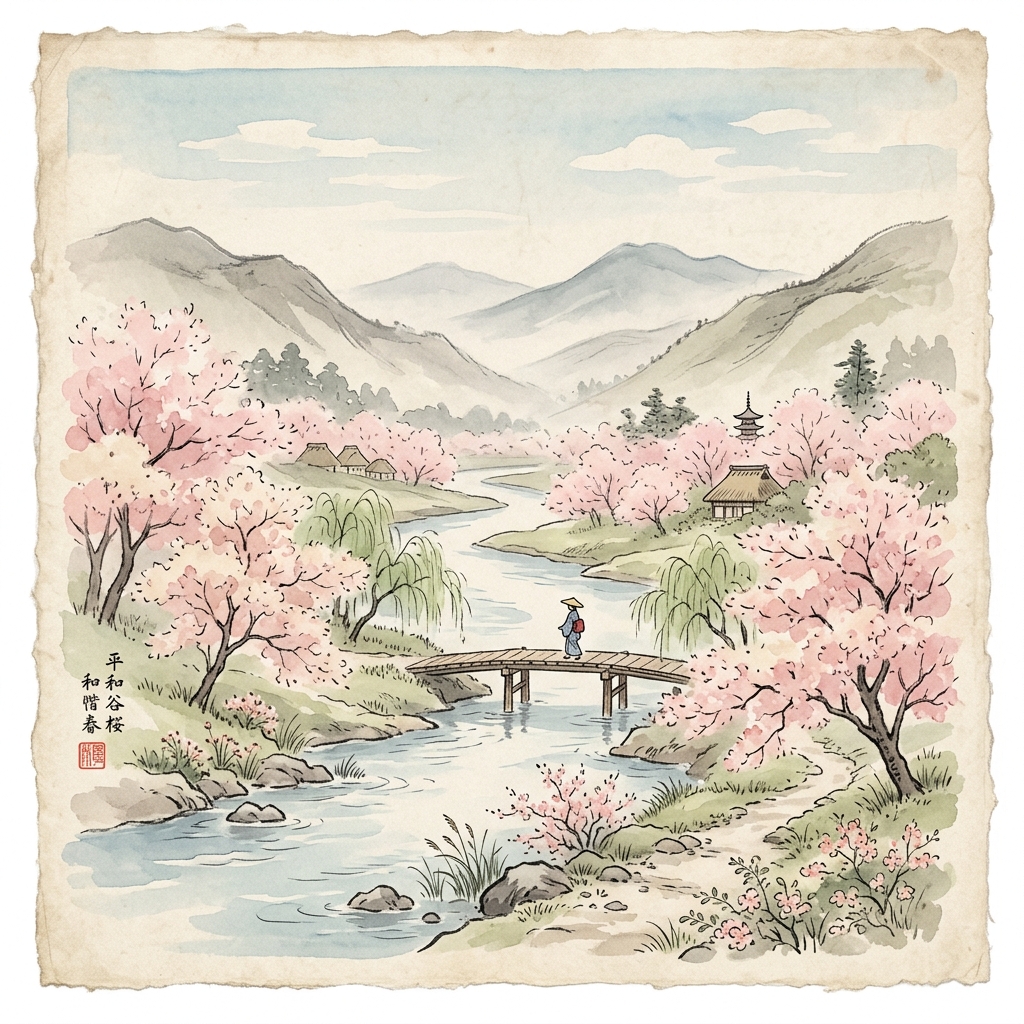
If these "leaves of words" wither and disappear, the precise cognitive frameworks they represent become incredibly difficult to access, express, and pass on. Language preservation is the preservation of different ways of being human.
Modern Sanctuaries: Cultivating the Digital Garden
Linguistic preservation cannot happen solely in academic archives; languages must be lived, spoken, and shared. This is why I built Kotonoha (kotonoha.shrivibhavan.com).
Standard language learning platforms often treat vocabulary like a sterile code-translation database, focusing on mechanical drills and standardized testing. Kotonoha takes a different approach: it is designed as a digital garden.
              [ Human Heart / Seed ]
                        │
                        ▼
            [ Kotonoha / Leaves of Words ]
                        │
         ┌──────────────┴──────────────┐
         ▼                             ▼
   [ Kotodama / Spirit ]       [ Cognitive Relativity ]
         │                             │
         ▼                             ▼
   [ Social Harmony ]          [ Worldview Preservation ]
By presenting Japanese vocabulary within its deeper poetic, cultural, and aesthetic context, Kotonoha aims to nurture an organic, empathetic connection between the learner and the language. It leverages modern web technology to create an accessible space where the "leaves of words" can be cultivated by a global audience, ensuring that these rich cognitive worldviews remain active, vibrant, and resilient in the digital age.
Cultivating Your Own Garden
Linguistic preservation begins with curiosity. By choosing to explore and learn a new language, you are expanding your own cognitive boundaries and keeping a culture's unique perspective on reality alive.
Language is the ultimate bridge of empathy. Let us continue to water the seeds of the heart, grow new leaves of expression, and protect the rich, diverse forest of human communication.
Start cultivating your vocabulary at kotonoha.shrivibhavan.com.
Have a suggestion or feedback?
Let me know what you think of this post, or suggest what I should write next.