Stop Reaching for Antibiotics: Your Body Already Has a Better System
As an engineer, I started looking at immunity the way I look at software: a self-healing system that gets better with stress, unless you keep overriding it.
 The familiar sight. But is it always the right call?
Disclaimer first
I'm a software engineer, not a doctor. This is me thinking out loud about something I noticed and researched, not medical advice. If you're seriously ill, see a professional. But if you're someone who pops an antibiotic every time you get a fever, this post is worth your 5 minutes.
The pattern I kept seeing
Fever hits. Within a few hours, someone pulls out a strip of antibiotics. Amoxicillin, Azithromycin, Ciprofloxacin, or whatever was leftover from last time, or handed over by the local chemist without a prescription.
"Le lo, jaldi theek ho jaoge."
No diagnosis. No doctor. Just antibiotics as the default response to feeling unwell.
I've seen it happen in my own family. I've seen friends do it. It's practically the default response to illness in India. And from an engineering perspective, it makes zero sense.
Two Types of Infections: Completely Different Failure Modes
Think of it like two different types of bugs in a system:
- Bacterial infection → an external process running unauthorized code in your system. Antibiotics are designed to kill or disable bacterial cells. They work here.
- Viral infection → not a cell at all. A virus is just a packet of genetic instructions wrapped in a protein shell. It hijacks your own cells to replicate. Antibiotics have no mechanism to touch it.
Most common fevers, such as seasonal flu, cold, or the generic "viral" your doctor mentions, are viral. Taking amoxicillin for a viral fever is like running rm -rf on a folder that doesn't exist. The command executes. Nothing useful happens. Except in this case, collateral damage does occur — to you.
 Antibiotics are a targeted tool, but they're being used like a general-purpose fix.
Why it feels like they "worked"
This is the classic correlation-causation trap.
You take an antibiotic on day 2 of a fever. You recover by day 5 or 6. Your brain logs: antibiotic → recovery.
But a typical viral fever resolves in 5-7 days regardless. Your immune system fought it and won — exactly as it was designed to. The antibiotic was a passenger, not the driver. You attributed the result to the wrong variable.
What you're actually damaging
1. Your Gut Health: The Part Nobody Talks About
Your gut is not just about digestion. It hosts trillions of bacteria, a complex ecosystem called the microbiome, and roughly 70% of your immune system is housed in and around your gut. These bacteria regulate inflammation, train immune cells, produce vitamins, and signal your brain through what's called the gut-brain axis.
Antibiotics don't discriminate. They are broad-spectrum weapons that wipe out the bacteria causing harm, yes, but they also devastate the beneficial colonies your body depends on. After a course of antibiotics, gut microbiome diversity can take weeks to months to recover. After repeated courses, some strains never fully return.
The downstream effects: weakened immunity, slower metabolism, poor nutrient absorption, increased susceptibility to infections, and even mood disruption. All from treating a viral fever that didn't need antibiotics in the first place.
2. Your immune system never learns
Think of immunity like a machine learning model. Every time it encounters a pathogen and clears it naturally, it updates, producing memory B cells and T cells that recognise the same pathogen faster next time. This is adaptive immunity. This is how the system gets smarter with every exposure.
Every time you short-circuit that with an antibiotic before the immune system has done its job, you deny it the training data. An immune system that's never been allowed to run its full cycle becomes slower, less confident, and less capable over time. You're not protecting your body. You're stunting it.
3. Antibiotic Resistance: A Problem Bigger Than You
This scales beyond individual health. Bacteria evolve. Overuse of antibiotics creates selection pressure, meaning the resistant strains survive, reproduce, and spread. We're already seeing this across India, which is among the highest antibiotic consumers globally.
Diseases like typhoid, tuberculosis, and pneumonia are developing resistance to drugs that used to reliably cure them. The WHO has listed antimicrobial resistance as one of the top ten global public health threats. Every unnecessary antibiotic is a small contribution to a world where the drugs stop working entirely.
What Ayurveda Got Right: 3,000 Years Ago
Here's the part that's genuinely interesting: Ayurveda had a working mental model for this long before modern immunology caught up.
In Ayurveda, fever is called Jwara and is described in the Charaka Samhita, one of the foundational classical texts, not as a disease to be eliminated, but as a natural response. The body's agni (metabolic fire) is elevated to burn off the pathogen and restore balance. The classical approach was to support the process, not suppress it.
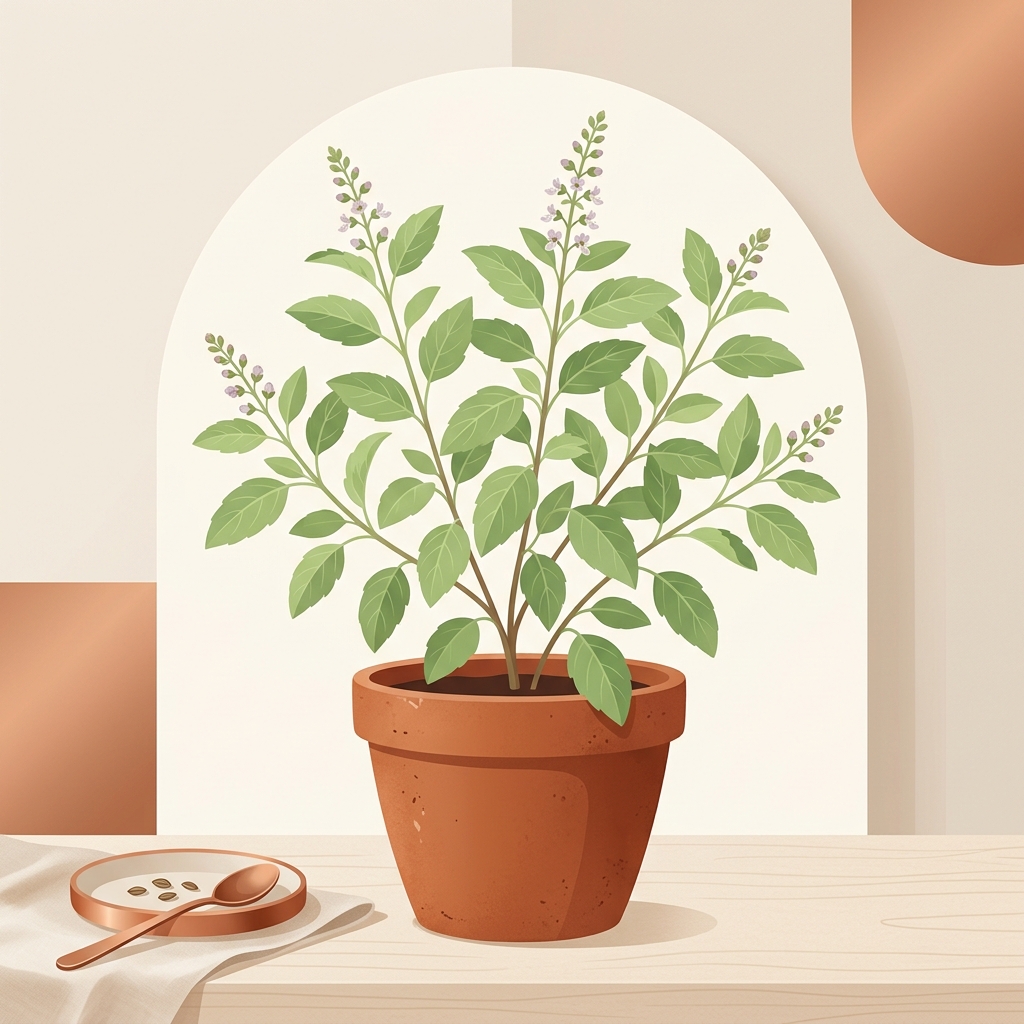 Tulsi, classified as "Queen of Herbs" in Ayurveda, referenced in the Rig Veda, is still one of the most effective herbs for fever and respiratory support.
The go-to interventions in Ayurveda for viral fever:
- Giloy (Guduchi / Tinospora cordifolia), referenced in the Sushruta Samhita as "Amrit" (nectar of life), has been used for over 1,500 years for fever management and immune support. Modern studies have shown measurable antipyretic and immune-modulating properties, including increased natural killer cell activity.
- Tulsi (Holy Basil / Ocimum sanctum), mentioned in the Rig Veda for its healing properties, is antiviral and anti-inflammatory. A Tulsi-ginger kadha is still one of the most effective home interventions for early-stage viral fever.
- Sunthi (Dry Ginger) reduces inflammation, supports digestion during illness, and helps the body manage fever with chills and body pain.
- Haldi (Turmeric) is anti-inflammatory and antimicrobial. The compound curcumin has been studied extensively for immune support and gut health.
- Trikatu (ginger + black pepper + long pepper) is described in classical texts for Kapha Jwara, the type of fever associated with respiratory infections and congestion.
The Charaka Samhita also explicitly emphasised rest, light food (particularly khichdi — easy to digest, warm, nourishing), and warm fluids during fever. Not rest because nothing better was available, but rest as the primary intervention.
This wasn't folk wisdom in the dismissive sense. It was a sophisticated framework built on observation over centuries, treating fever as a process to support, not a problem to suppress. Modern immunology agrees with almost every part of it.
Water + ORS: The Most Underrated Part of Recovery
After rest, hydration is the single most impactful thing you can do during a fever. And most people get this wrong.
Fever causes significant fluid loss through sweating. Your cells need water to run every immune process, including producing antibodies, flushing waste, and transporting nutrients. Dehydration slows all of it down.
But plain water is not enough on its own.
When you sweat, you lose not just water but essential electrolytes, including sodium, potassium, and chloride. These regulate fluid balance inside your cells. Without them, drinking plain water can actually dilute your electrolytes further, which is why some people feel worse despite drinking a lot.
This is where ORS (Oral Rehydration Salts) comes in. It's a precise mix of salts and glucose designed to maximise absorption. Glucose and sodium together activate a transport mechanism in the gut that pulls water into the bloodstream far more efficiently than water alone. It's the same science used to treat severe dehydration, and it works just as well at home during a regular viral fever.
The right way to drink it: sip by sip.
Not a full glass at once. Small, frequent sips throughout the day. This gives your gut time to absorb properly and keeps your hydration levels consistently topped up rather than spiking and dropping. A sip every few minutes is more effective than gulping 500ml every few hours.
Mix one ORS sachet in a litre of water and keep it next to you all day. Alternate with warm water, Tulsi tea, or ginger kadha. Your recovery will be noticeably faster.
What Your Body Actually Needs: The Full Picture
Put it all together:
- Rest completely: Your immune system is running a full-scale operation. Give it the energy it needs. Sleep is when the most repair happens.
- Sip ORS water throughout the day: Take small, frequent sips. Replenish fluids and electrolytes lost through fever and sweating.
- Tulsi-ginger kadha: For antiviral support, anti-inflammatory properties, and respiratory health twice a day.
- Light food: Khichdi, soups, and easy-to-digest meals. Your appetite drops for a reason; the body is conserving energy for immune function.
- Time: 5 to 7 days for a typical viral fever. There is no shortcut that doesn't come with trade-offs.
 Rest + ORS + warm fluids + time. The oldest protocol in the book, and still the most effective one for most viral fevers.
When antibiotics are genuinely the right call
Antibiotics are critical medicine. They save lives. The issue is misuse, not existence.
You likely do need antibiotics if:
- A doctor has confirmed a bacterial infection through examination or test (throat swab, urine culture, blood work)
- Your fever has persisted beyond 7–10 days and is worsening, not improving
- Symptoms suggest bacterial causes, such as severe throat pain with white patches, painful urination, localised swelling with pus, or high fever with rigors
The phrase that matters: a doctor confirmed it. Not a chemist. Not leftover strips from three months ago. Not because it "worked last time."
The systemic reality
It's easy to frame this as individual irresponsibility, but the reality is more nuanced. Many people in India self-medicate because:
- Doctor consultations are expensive or geographically inaccessible
- Chemists dispense antibiotics over the counter without prescriptions
- There's immense social and family pressure to do something rather than wait
- The healthcare system is stretched thin, making proper diagnosis hard to access quickly
These are legitimate barriers. But awareness is still the first lever. When you understand the mechanism (why rest works, why the immune system needs to run its full cycle, why ORS beats plain water, and why antibiotics actively harm when misused), you're better equipped to push back on the habit.
The takeaway
Your immune system is not a passive system waiting for external intervention. It's an active, adaptive, self-improving defence network refined over millions of years. A fever is that system running at full capacity.
Ayurveda understood this at a conceptual level thousands of years before we had the biology to explain it. The Charaka Samhita said: support the process. Modern immunology says: support the process. They agree.
So next time the fever hits, brew the kadha, drink your ORS water sip by sip, and rest. Give the system the time and resources it needs to do what it was built to do.
Save antibiotics for when they're actually the right tool.
References: Charaka Samhita, Sushruta Samhita (classical Ayurvedic texts) · WHO Global Antimicrobial Resistance Action Plan · Journal of Ethnopharmacology — Giloy immune modulation study (2018)
Have a suggestion or feedback?
Let me know what you think of this post, or suggest what I should write next.